How to · guide 10 of 12 · 4 min read
Liquidated damages — P(late) × rate per milestone
The board doesn't think in P-values; it thinks in pounds. The LD card converts each milestone's simulated distribution into money against its contractual date — expected exposure across all iterations, and the P80 case for the contingency conversation.
- Run first. The card sits under Milestone confidence on 5 Results and draws on the same simulated milestone distributions. (Milestones are your schedule's zero-duration activities; project completion always gets a row.)
- Enter the contractual dates. Each row's Contractual date defaults to the milestone's planned date — set the real contract dates where they differ.
- Enter the LD rate per milestone in LD rate (£/day). Rate and dates save into the Risk File and survive re-links, so month two costs nothing.
- Read the exposure. Per milestone: P(late) against the contractual date (colour-coded), expected overrun in days, Expected LD (rate × mean overrun across all iterations — the actuarial number), and P80 LD exposure (rate × days late in the P80 case — the prudent-provision number). A totals row sums the rated milestones, and the whole table folds into the QSRA / QCRA pack automatically once any rate is set.
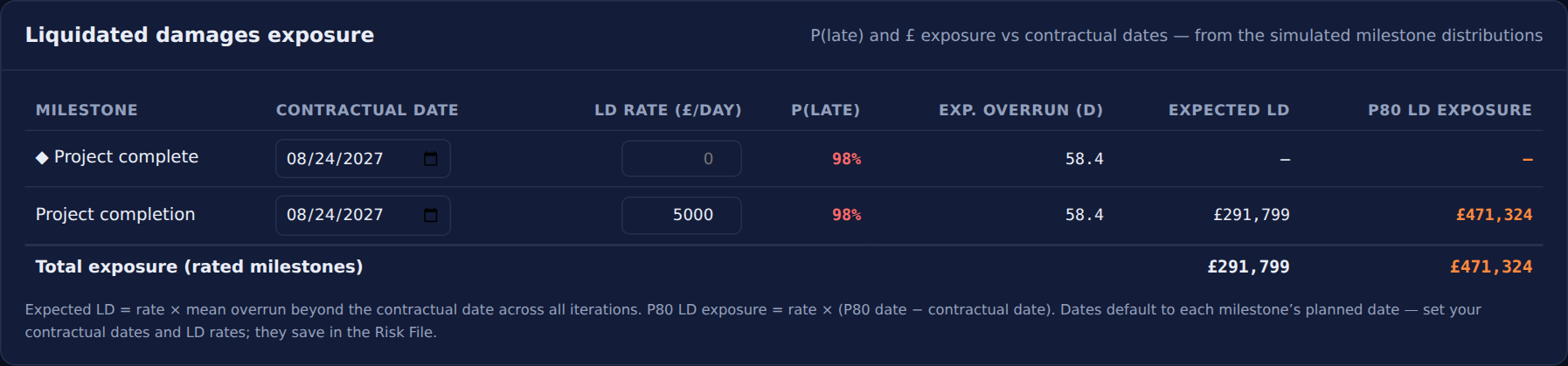 Two numbers per milestone: what lateness costs on average, and what it costs in the case you're committing to.
Read them together. Expected LD far below P80 exposure means the risk is in the tail — mitigation and contingency, not forecast revision. P(late) at 98% with a modest expected LD means you're almost certainly a little late: renegotiate the date, don't just provision.
Price a completion date →